If this message is not displayed properly, click here please.

From Civic Action to System Reform: Building Southeast Asia’s Clean Energy Future 

Welcome to the November 2025 Edition of SIPET Connect

In this month’s edition collaboration, creativity, and reform take center stage in driving the region’s clean energy shift. 

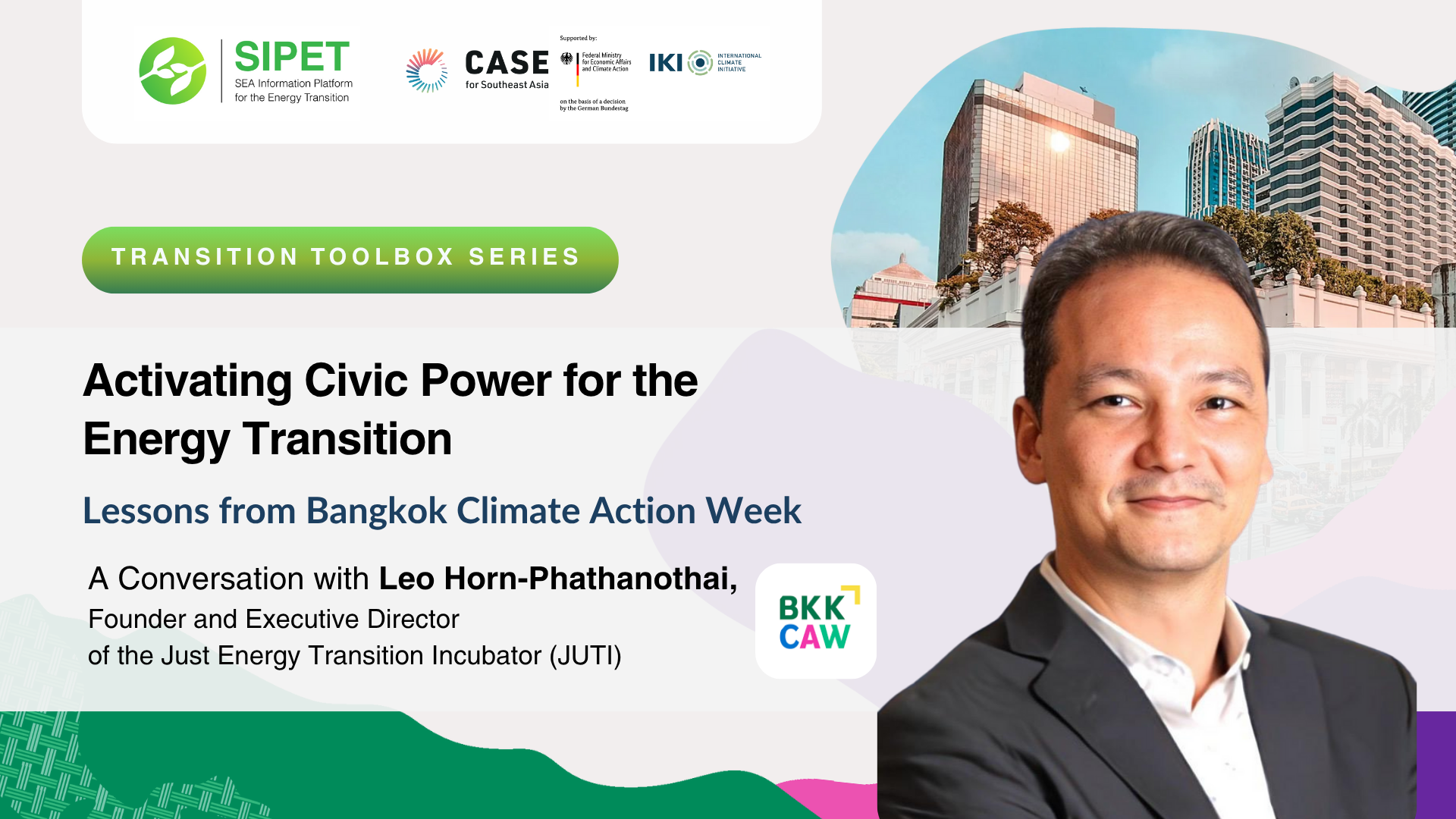
For our Transition Toolbox, Leo Horn-Phathanothai, Founder and Executive Director of the Just Energy Transition Initiative (JUTI), reflects on how Bangkok Climate Action Week (BKKCAW) turned climate dialogue into a citywide experiment in civic engagement and inclusion. The Explainer unpacks how battery energy storage systems (BESS) are bridging renewable supply, demand gaps, while our Highlight features the launch of the ASEAN School of Regulation, a regional initiative training energy regulators to advance cross-border power trade and sustainable reform. 

Plus, explore upcoming events and opportunities shaping Southeast Asia’s energy transition.  

 Transition Toolbox Series
Climate conversations often unfold behind closed doors, inside ministries, boardrooms, and conference halls. But what happens when those discussions spill out into the open, transforming the city itself into a stage for collective climate action?

For Leo Horn-Phathanothai, Founder and Executive Director of the Just Energy Transition Incubator (JUTI), this came to life through Bangkok Climate Action Week (BKKCAW), a nine-day citywide experiment that brought together more than 45,000 people across 270 events. In this month’s Transition Toolbox conversation, Leo reflects on how civic power, culture, and inclusion can accelerate Southeast Asia’s energy transition. He shares what it takes to design an event that connects policy discussions with public engagement, and how openness, collaboration, and new narratives can help sustain momentum for meaningful climate action. 

Like what you see so far?

Forward this newsletter to your friends and colleagues. Invite them to join the SIPET community by...

Renewable Hydrogen in Power: Promise, Pitfalls, and Priorities 

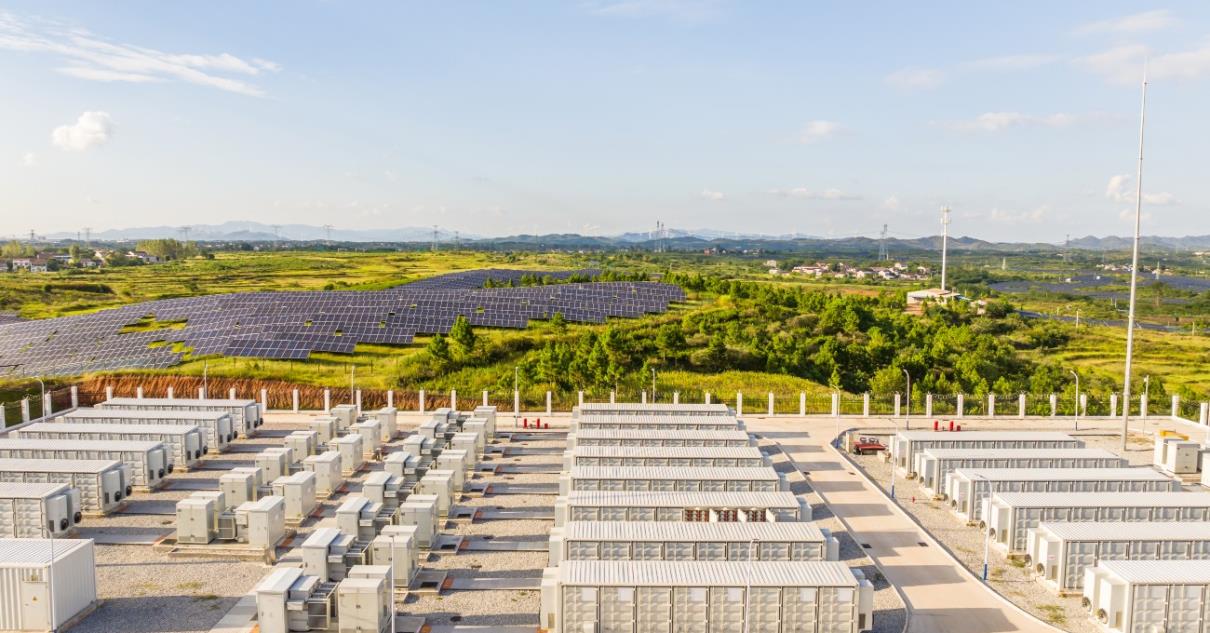
As Southeast Asia scales up solar and wind, ensuring steady electricity supply is becoming a major challenge. Based on insights from IRENA’s recent article and podcast on Battery Energy Storage Systems (BESS), this explainer highlights how BESS bridges the gap by storing excess renewable power when production exceeds demand and releasing it later to match consumption when renewables are not producing electricity. From large utility-scale systems connected to national grids to behind-the-meter batteries installed in homes, offices, and factories, BESS adds the flexibility needed to keep power reliable, affordable, and clean. 

Over the past decade, battery costs have fallen dramatically, down 93% since 2010, driven by advances in lithium-ion and lithium iron phosphate (LFP) technologies. As prices drop and capacity expands, BESS is fast becoming the backbone of renewable integration, helping make 24/7 clean power a reality for the region. 

Key takeaways 

  • Flexible storage for renewables: BESS balances supply and demand in real time by storing excess solar and wind power and discharging it when needed. 
  • Two distinct applications: Utility-scale batteries support grid stability and frequency regulation, while behind-the-meter systems help users manage energy costs and ensure backup power. 
  • Costs are plummeting: The global price of battery storage fell by 93% between 2010 and 2024 — from USD 2,571/kWh to just USD 192/kWh — making renewables with storage increasingly competitive with fossil fuels. 
  • Technology evolution: Lithium-ion batteries lead the market, with lithium iron phosphate (LFP) emerging as the preferred chemistry for utility-scale projects thanks to longer lifespans, better safety, and lower cost. 
  • Driving the clean energy transition: As storage becomes cheaper and more widespread, it will enable grids to integrate higher shares of renewables, paving the way for a stable, around-the-clock clean energy future. 

🎧 Listen to IRENA’s All Things Renewable podcast episode on BESS here 

ASEAN School of Regulation
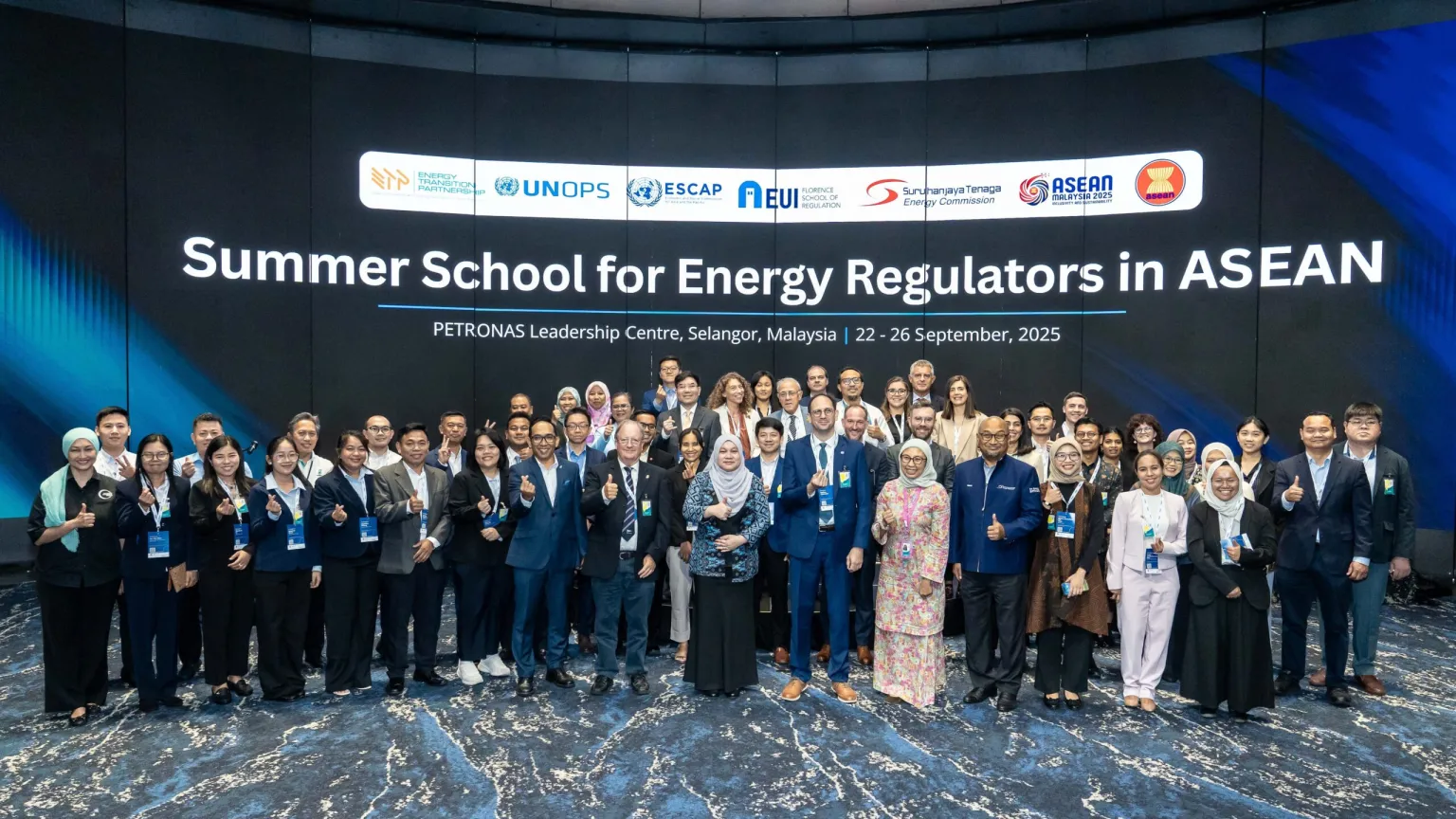
The ASEAN School of Regulation, launched under the Southeast Asia Energy Transition Partnership (ETP) in collaboration with the ASEAN Secretariat and UNESCAP, is officially open for business! The initiative aims to strengthen the technical and regulatory capacity of ASEAN energy regulators to advance the region’s energy transition and support cross-border electricity trade under the ASEAN Power Grid.

Following the project’s design phase initiated in June 2025, the pilot Summer School for Regulators took place on 22–26 September 2025 in Malaysia, hosted by the Energy Commission (Suruhanjaya Tenaga). The program brought together 35 mid-level regulatory and utility officers from ASEAN Member States for training on power-sector reform, regional integration, and regulatory innovation. Implemented by the Florence School of Regulation, the initiative emphasizes gender equality, social inclusion, and sustainable regulatory practices. 
For readers who want to explore more regional perspectives and upcoming engagements around COP30 and Southeast Asia’s energy transition, here are a few useful links:

Stay tuned for our December newsletter, where we will explore takeaways from COP30!

SIPET Noticeboard

Looking to grow your career or stay ahead in Southeast Asia’s clean energy sector? This section features curated job openings and key upcoming events. Discover roles that align with your goals and events that keep you informed, connected, and inspired.

Jobs   

⏺   KPMG Thailand 

Corporate ESG Officer (Senior - Assistant Manager) - Bangkok 

⏺  Global Green Growth Institute 

Senior Officer, Energy Transition – Jakarta 

⏺  The Nature Conservancy 

Policy & Partnerships Advisor – Singapore 

⏺   EY 

Associate / Senior Associate, Climate Change and Sustainability Services, Assurance – Singapore 

⏺   UNEP 

Associate Programme Management Officer – Bangkok 

⏺  Agoda 

Sustainability Specialist - Bangkok 


⏺  Arup 

PACT Country Associate – Bangkok 

Environmental Consultant – Manila 

⏺  SGV & Co. 

Climate and Energy Senior Associate (Energy Transition & Decarbonization) - Makati 

Events   

⏺ Conference on Indonesian Foreign Policy (CIFP) | 29 November | Indonesia | Register Here


⏺ Philippines Energy Transition Dialogue 2025 | 3-4 December | Register Here 

⏺ 4th World Hydrogen Conference ASEAN 2026 | 28-29 January 2026| Bangkok| Register here 

⏺ 2nd Annual Vietnam Offshore Wind Roundtable | Ho Chi Minh City| 15 January 2026| Register Here 


Want to highlight energy transition jobs and opportunities to a community of Southeast Asia’s clean energy professionals?

Click here to share your job openings and opportunities, and tap into our growing network of experts, practitioners, and decision-makers across the region and beyond.

Call for Stories of Change!

Know a good story of impact you want to share? Submit your story here t
o be featured in the next SIPET newsletter!
Your Reading List
ABOUT CASEThe Project "Clean, Affordable, and Secure Energy for Southeast Asia (CASE)" aims to shift the energy sector narrative in Southeast Asia towards an evidence-based clean energy transition, with the aim to increase political ambition to comply with the Paris Agreement. SIPET is part of an effort by CASE to accomplish the shift of the energy sector narrative by supporting: (a) research and evidence, (b) transparency and mapping, (c) dialogue with non-energy sector stakeholders, (d) technical assistance on clean energy, and (e) promoting public discourse on the energy transition.CASE is funded by the German Federal Ministry for Economic Affairs and Climate Action (BMWK), and jointly implemented by the Deutsche Gesellschaft für Internationale Zusammenarbeit (GIZ) GmbH and international and local expert organisations in the area of sustainable energy transformation and climate change: Agora Energiewende and NewClimate Institute (regional level), the Institute for Essential Services Reform (IESR) in Indonesia, the Institute for Climate and Sustainable Cities (ICSC) in the Philippines, the Energy Research Institute (ERI) and Thailand Development Research Institute (TDRI) in Thailand.
Southeast Asia Information Platform for the Energy Transition (SIPET)c/o Clean, Affordable, and Secure Energy (CASE) for Southeast Asia

193/63  Lake Rajada Office Complex, 35th floor, New Ratchadapisek Road, Klongtoey, Bangkok 10110, Thailand

Reach out to us:

Website: https://www.sipet.org  | Email: info@sipet.org | LinkedIn: Southeast Asia Information Platform for the Energy Transition - SIPET

You are receiving this newsletter based on your past interest in events hosted by CASE and SIPET.Consider sharing this with colleagues who might want to SUBSCRIBE TO SIPET CONNECT NEWSLETTER.If you wish to unsubscribe and no longer receive these updates, please click this link.
 
 
GIZ GmbH
Maximilian Heil
Dag-Hammarskjöld-Weg 1-5
65760 Eschborn
Deutschland

+49 61 96 79-0
maximilian.heil@giz.de