If this message is not displayed properly, click here please.

Turning Momentum into Delivery: The Next Phase of ASEAN’s Energy Transition 

Welcome to the February 2026 Edition of SIPET Connect

In this edition, we take a closer look at a question that continues to surface across Southeast Asia’s transition: why do strong projects still face challenges finding the right capital (and vice versa)? 

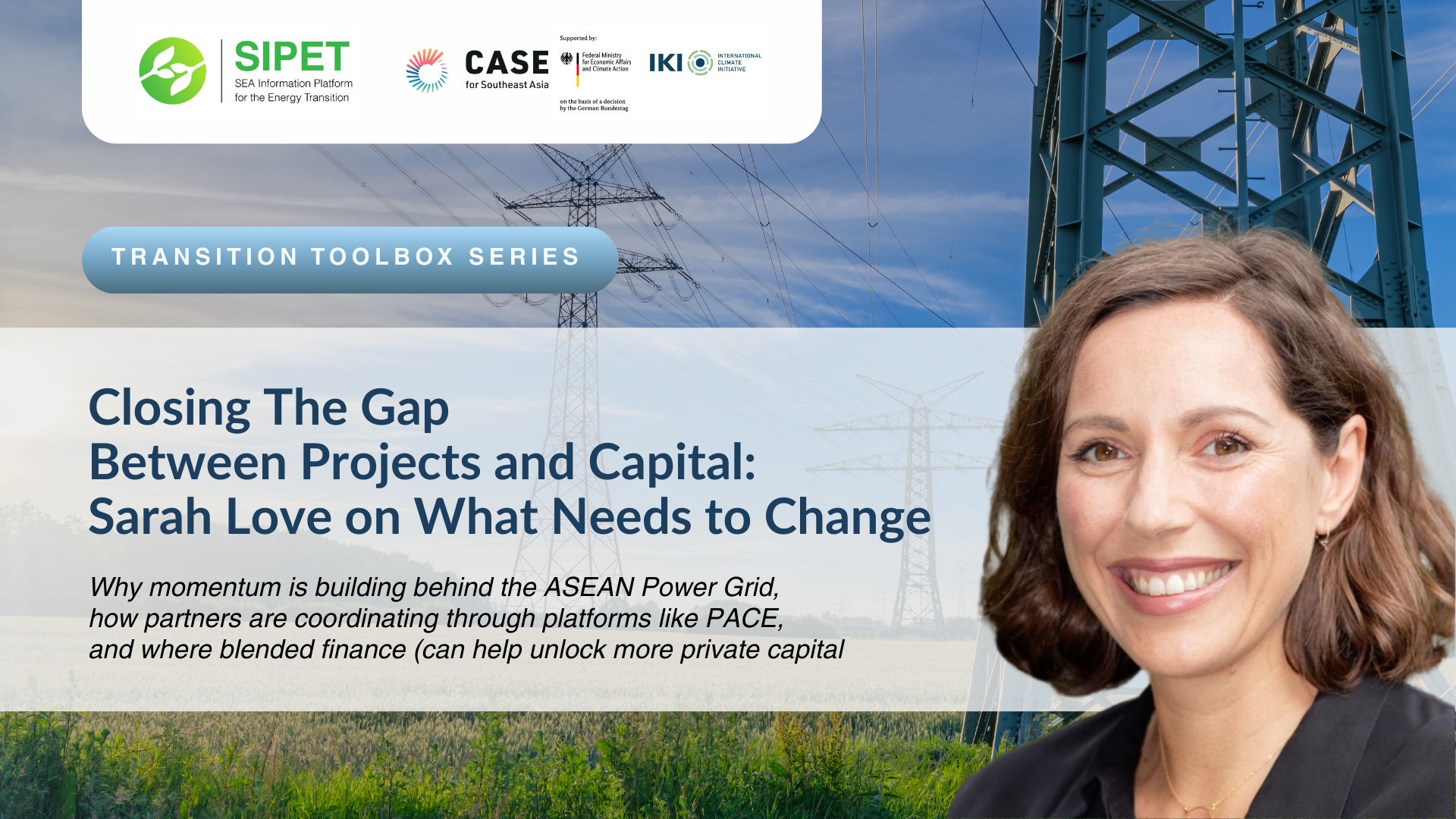
In this month’s Transition Toolbox, Sarah Love, who leads the FCDO’s Climate, Energy and Nature Network in Southeast Asia, speaks with Peter du Pont of SIPET Connect about what actually needs to change—from building a stronger pipeline of investable opportunities, to why momentum is building behind the ASEAN Power Grid, and how coordination platforms like PACE and blended finance tools (including FAST-P) can unlock the flow of private capital from interest to action. 

Then, our Explainer Series examines how ASEAN can scale up cross-border power trade and strengthen regional grid connectivity. 

Don’t forget to glance at our noticeboard, which each month features a range job openings for those who are seeking opportunities and advancement in the energy transition fie

 Transition Toolbox Series
This edition’s Transition Toolbox features an interview with Sarah Love, who leads the UK Foreign, Commonwealth & Development Office (FCDO)’s Climate, Energy and Nature Network in Southeast Asia.

In a conversation with Peter du Pont of SIPET Connect, Sarah unpacks what it will take to close the gap between project ideas and investable opportunities,  explains the momentum behind the ASEAN Power Grid, how stakeholders are coordinating through platforms like PACE, and where blended finance (including facilities like FAST-P) can help unlock more private capital.  

Like what you see so far?

Forward this newsletter to your friends and colleagues. Invite them to join the SIPET community by...

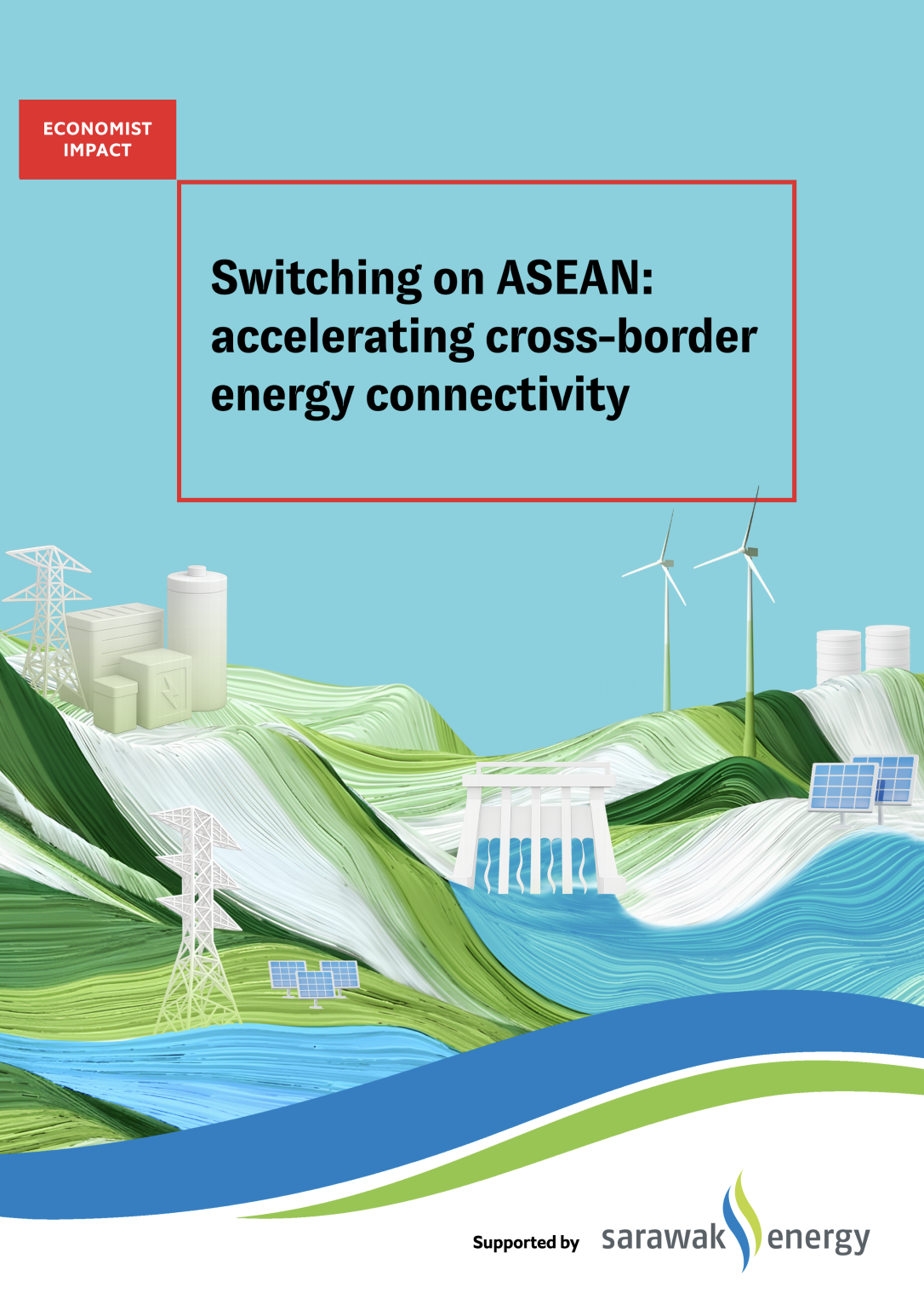
Switching on ASEAN: Accelerating cross-border energy connectivity

This special feature in Economist Impact highlights why regional grid interconnection is becoming urgent for Southeast Asia and what needs to shift to make cross-border electricity trade scale beyond pilots. 

Electricity demand is rising quickly across ASEAN, and new loads such as data centers, electric vehicles, and cooling are increasing the premium on reliability. At the same time, countries are adding more renewables, which makes the supply more variable. Stronger interconnections can help balance these dynamics by moving cleaner power to where it is needed, lowering system costs, and strengthening energy security through a more diversified supply. 

The biggest constraints are often not the cables, but the rules and systems around them. Cross-border trade scales when technical standards and operations align, and when commercial arrangements such as wheeling charges and settlement rules are clear enough to make projects predictable and financeable. Without that “plumbing,” each deal becomes bespoke, slow, and harder to replicate. 

Key takeaways 

  • Demand growth is reshaping priorities 
    Power demand is climbing fast, and new loads are tightening reliability and flexibility needs. 
  • Interconnection can lower costs and boost resilience 
    Regional trade can reduce costs by sharing cheaper power and reducing reliance on backup generation, while also enabling emergency support. 
  • Rules and standards unlock scale 
    Aligned grid codes, grid access arrangements, and standard wheeling and settlement rules make transactions repeatable and bankable. 
  • Grid investment must accelerate 
    Large-scale trade needs major upgrades in transmission and distribution, not only new cross-border links. 
  • Finance needs credible risk-sharing 
    Offtaker, currency, policy, and settlement risks deter investors unless cost recovery and de-risking structures are clear. 
  • Technology and skills are part of the bottleneck 
    HVDC, real-time telemetry, and modern grid operations require coordinated capacity-building and specialised talent. 
SIPET Noticeboard

Looking to grow your career or stay ahead in Southeast Asia’s clean energy sector? This section features curated job openings and key upcoming events. Discover roles that align with your goals and events that keep you informed, connected, and inspired.

Jobs   

⏺  Asian Development Bank (ADB) 

 Adaptation Solutions Specialist (Human and Social Development) – Philippines 

⏺ Global Wind Energy Council (GWEC) 

 Grids Officer – Philippines  

⏺ New Energy Nexus  

Thailand Country Manager  

⏺ Schneider Electric 

 Energy Efficiency Specialist – Thailand

⏺ ERM 

Decarbonization Director/Partner – Thailand 

Consulting Associate - Sustainability & Climate Change - Indonesia 


⏺  Entoria Energy 

Country Manager Vietnam 

⏺  KPMG 

Environmental Social Governance (ESG) Assistant Manager - Philippines 

Events   

⏺ Asia-Pacific Forum on Sustainable Development 2026 | 24- 27 February 2026 | Thailand | Register Here 

⏺ Renewable Energy Markets Asia 2026 | 21-22 April 2026 | Singapore | Register Here 

⏺ Asia Clean Energy Forum 2026 | 8-11 June 2026 | Philippines | Subscribe for Updates 

⏺ The Solar Week Indonesia 2026 | 22 July 2026 | Indonesia | Register Here 


Want to highlight energy transition jobs and opportunities to a community of Southeast Asia’s clean energy professionals?

Click here to share your job openings and opportunities, and tap into our growing network of experts, practitioners, and decision-makers across the region and beyond.

Call for Stories of Change!

Know a good story of impact you want to share? Submit your story here t
o be featured in the next SIPET newsletter!
Your Reading List
ABOUT CASEThe Project "Clean, Affordable, and Secure Energy for Southeast Asia (CASE)" aims to shift the energy sector narrative in Southeast Asia towards an evidence-based clean energy transition, with the aim to increase political ambition to comply with the Paris Agreement. SIPET is part of an effort by CASE to accomplish the shift of the energy sector narrative by supporting: (a) research and evidence, (b) transparency and mapping, (c) dialogue with non-energy sector stakeholders, (d) technical assistance on clean energy, and (e) promoting public discourse on the energy transition.CASE is funded by the German Federal Ministry for Economic Affairs and Climate Action (BMWK), and jointly implemented by the Deutsche Gesellschaft für Internationale Zusammenarbeit (GIZ) GmbH and international and local expert organisations in the area of sustainable energy transformation and climate change: Agora Energiewende and NewClimate Institute (regional level), the Institute for Essential Services Reform (IESR) in Indonesia, the Institute for Climate and Sustainable Cities (ICSC) in the Philippines, the Energy Research Institute (ERI) and Thailand Development Research Institute (TDRI) in Thailand.
Southeast Asia Information Platform for the Energy Transition (SIPET)c/o Clean, Affordable, and Secure Energy (CASE) for Southeast Asia

193/63  Lake Rajada Office Complex, 35th floor, New Ratchadapisek Road, Klongtoey, Bangkok 10110, Thailand

Reach out to us:

Website: https://www.sipet.org  | Email: info@sipet.org | LinkedIn: Southeast Asia Information Platform for the Energy Transition - SIPET

You are receiving this newsletter based on your past interest in events hosted by CASE and SIPET.Consider sharing this with colleagues who might want to SUBSCRIBE TO SIPET CONNECT NEWSLETTER.If you wish to unsubscribe and no longer receive these updates, please click this link.
 
 
GIZ GmbH
Maximilian Heil
Dag-Hammarskjöld-Weg 1-5
65760 Eschborn
Deutschland

+49 61 96 79-0
maximilian.heil@giz.de