If this message is not displayed properly, click here please.

Gender, Power, and the Energy Transition: Moving from Inclusion to Structural Change 

Welcome to the March 2026 edition of SIPET Connect

This month’s SIPET Connect comes at a time of heightened uncertainty in global energy markets, with ongoing disruptions, including rising tensions in the Middle East, once again bringing energy security to the forefront. We will take a closer look at these developments, including perspectives such as GIZ CASE’s recent blog on “Tension in the Middle East,” in our next edition. (check out in our reading list!)

Against this backdrop, and marking March as Global Gender Equality Month, including International Women's Day, we turn to a dimension of the energy transition that is gaining visibility, but still struggles to translate into system-level change: gender. 

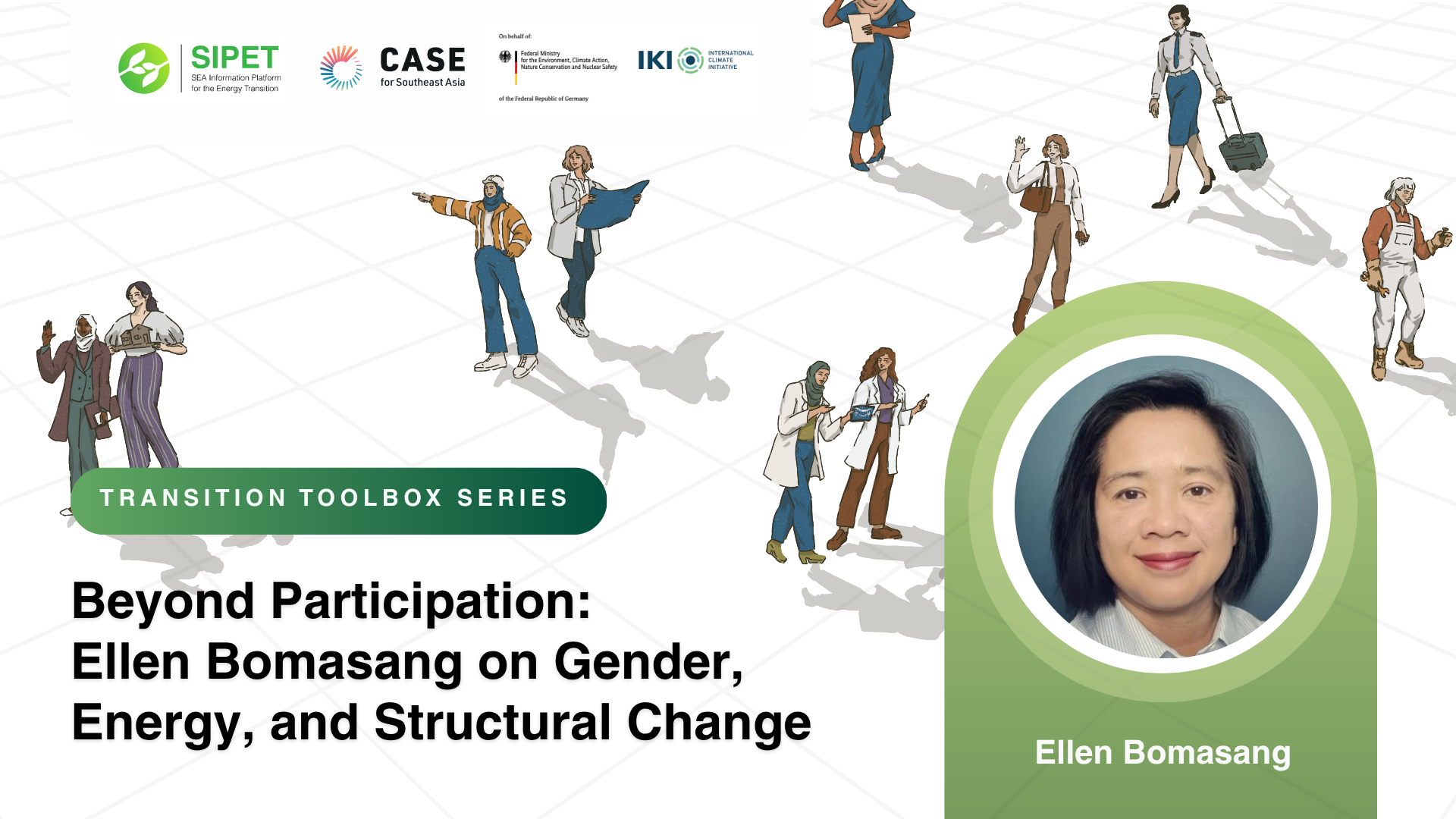
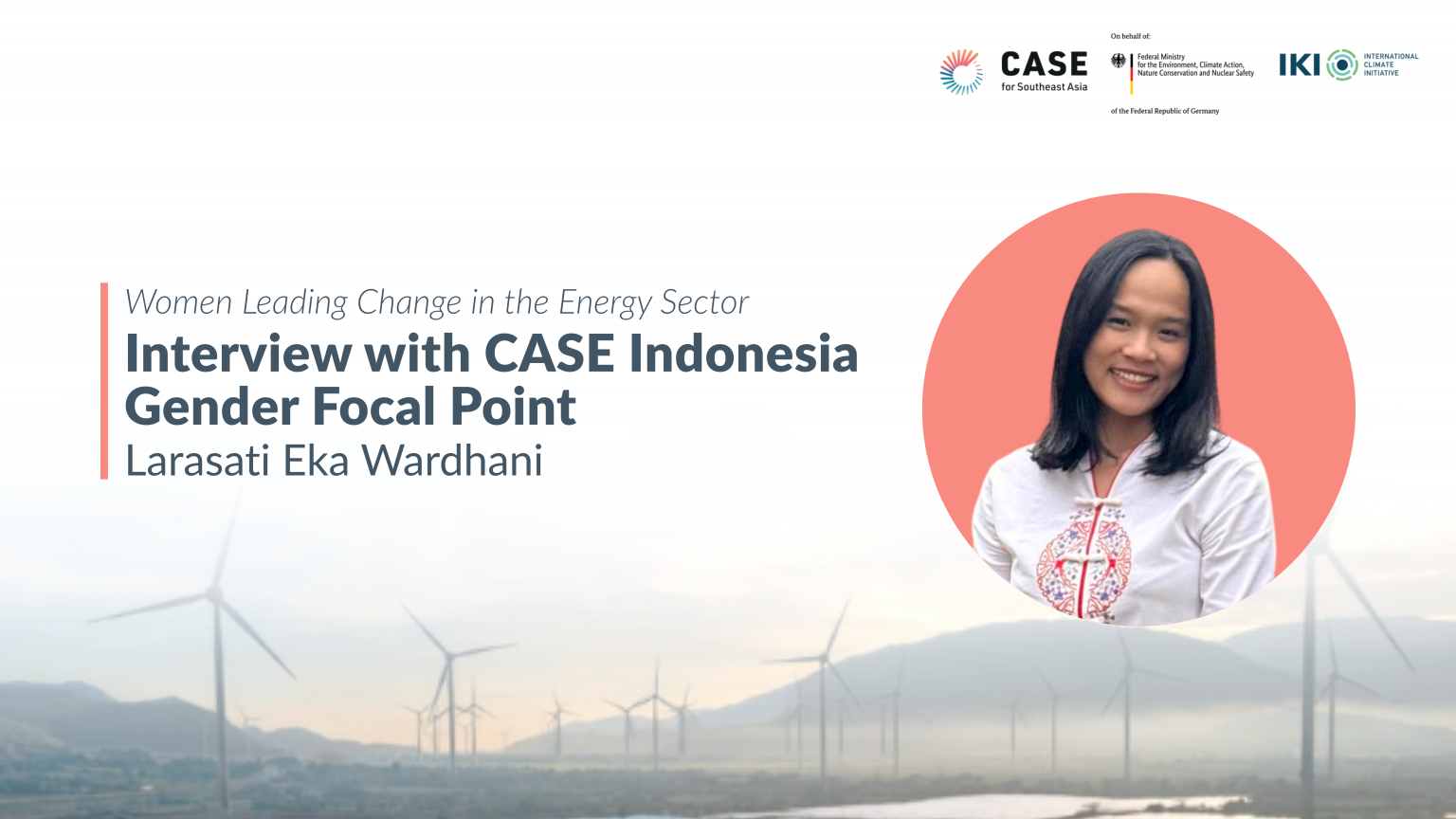
March’s Transition Toolbox, Ellen Bomasang shares insights from over three decades across energy and development, reflecting on how the sector’s approach to gender has evolved—and what it will take to move beyond participation toward structural change. From workforce dynamics to financing and institutional design, the conversation highlights where real progress is happening, and where gaps remain. 

Our Explainer Series builds on this by unpacking what the global evidence says about women’s participation in renewable energy, and why a gender-responsive approach is essential to making the transition both effective and equitable. 

We also take a closer look at the role of leadership in shaping transition outcomes, and why closing gender gaps in decision-making is not just about representation, but about delivering more resilient and inclusive energy systems.  

 Transition Toolbox Series

This month’s Transition Toolbox turns to one of the most critical, yet often under-integrated, dimensions of the energy transition: gender. In this conversation, Ellen Bomasang, a long-time energy and international development practitioner with experience spanning Asia, Africa, and beyond, reflects on her journey across the sector and how her work has increasingly centered centred on questions of access, equity, and inclusion. 

Drawing on decades of experience across policy, project design, and community-level energy systems, she shares how the conversation on gender in energy has evolved—from broad notions of inclusion to a more intentional focus on structural barriers and differentiated needs. The discussion also explores what it takes to move beyond participation toward meaningful, system-level change, including shifts in institutions, financing approaches, and workplace dynamics. 


Like what you see so far?

Forward this newsletter to your friends and colleagues. Invite them to join the SIPET community by...

 Renewable Energy: A Gender Perspective

This report by International Renewable Energy Agency examines how the global energy transition is reshaping opportunities for women—and where structural gaps continue to persist. As renewable energy scales rapidly, the report highlights why gender equality is not just a social goal, but a critical factor in building an inclusive, effective, and sustainable energy system. 

The renewable energy sector has seen stronger female participation compared to traditional energy industries, particularly in areas such as administration and community engagement. However, women remain underrepresented in technical and leadership roles, reflecting deeper systemic barriers in education, hiring practices, and workplace structures. As countries invest in clean energy, these gaps risk being replicated—or widened—if not addressed intentionally. 

The report underscores that a gender-responsive transition requires more than increasing participation. It calls for embedding gender considerations into policy, workforce development, financing, and project design. This includes creating enabling environments where women can access skills, leadership pathways, and decision-making roles, ensuring that the benefits of the transition are more equitably distributed. 

Key takeaways 

  • Renewables offer opportunity—but gaps persist 
    Women’s participation is higher in renewables than in fossil fuels, but remains concentrated in non-technical roles. 
  • Structural barriers shape outcomes 
    Education pathways, hiring networks, and workplace norms continue to limit women’s entry and advancement in the sector. 
  • Policy and design choices matter 
    Gender-responsive policies and project frameworks can influence who benefits from energy access and job creation. 
  • Leadership and decision-making remain uneven 
    Women are still underrepresented in senior roles, limiting their influence on how the transition is shaped. 
  • A just transition requires intentional action 
    Without targeted interventions, the clean energy transition may replicate existing inequalities rather than resolve them. 
  • Skills and workforce development are critical 
    Building a diverse talent pipeline requires early-stage interventions, including STEM access and targeted training. 
As the global push to phase out fossil fuels accelerates, leadership is emerging as a critical lever—and one that remains unevenly distributed. Women continue to be underrepresented in energy decision-making, particularly in fossil fuel–dependent sectors, even as evidence grows that more inclusive leadership leads to stronger and more durable climate outcomes. 

Women leaders often bring a broader lens to the transition, placing greater emphasis on long-term sustainability, social equity, and community impacts. This becomes especially important in managing the real-world complexities of fossil fuel phaseout—where policies must balance decarbonisation with jobs, affordability, and local development. 

Across levels—from national governments to local movements—women are playing a key role in shaping more inclusive transition pathways. Their leadership is helping to reframe climate action not just as an emissions challenge, but as a societal shift that must account for fairness, access, and resilience. 

Closing the leadership gap is therefore not only about representation, but about effectiveness. A transition that is led more inclusively is better positioned to navigate trade-offs, build public support, and deliver outcomes that are both ambitious and equitable. 

SIPET Noticeboard

Looking to grow your career or stay ahead in Southeast Asia’s clean energy sector? This section features curated job openings and key upcoming events. Discover roles that align with your goals and events that keep you informed, connected, and inspired.

Jobs   

⏺ Asian Development Bank (ADB) 

Sustainable Solutions Specialist – Philippines 

⏺ New Energy Nexus  

Thailand Country Manager  

⏺ Schneider Electric 

 Energy Efficiency Specialist – Thailand 

⏺ ERM 

Corporate Sustainability & Climate Change Managing Consultant - Thailand 

⏺ Southeast Asia Energy Transition Partnership 

Request For Proposals: Submarine Power Cable Development Framework for ASEAN 


⏺  Entoria Energy 

Assistant Business Development Manager - Thailand 

⏺  Apple 

Supplier Carbon Solutions Project Manager - Vietnam 

Events   

⏺ ASEAN Energy Gender Week | 30 March - 2 April | Philippines | Learn More Here 

⏺ Renewable Energy Markets Asia 2026 | 21-22 April 2026 | Singapore | Register Here 

⏺  Asia Clean Energy Forum 2026 | 8-11 June 2026 | Philippines | Register Here 

⏺  The Solar Week Indonesia 2026 | 22 July 2026 | Indonesia | Register Here 


Want to highlight energy transition jobs and opportunities to a community of Southeast Asia’s clean energy professionals?

Click here to share your job openings and opportunities, and tap into our growing network of experts, practitioners, and decision-makers across the region and beyond.

Call for Stories of Change!

Know a good story of impact you want to share? Submit your story here t
o be featured in the next SIPET newsletter!
Your Reading List
ABOUT CASEThe Project "Clean, Affordable, and Secure Energy for Southeast Asia (CASE)" aims to shift the energy sector narrative in Southeast Asia towards an evidence-based clean energy transition, with the aim to increase political ambition to comply with the Paris Agreement. SIPET is part of an effort by CASE to accomplish the shift of the energy sector narrative by supporting: (a) research and evidence, (b) transparency and mapping, (c) dialogue with non-energy sector stakeholders, (d) technical assistance on clean energy, and (e) promoting public discourse on the energy transition.CASE is funded by the German Federal Ministry for Economic Affairs and Climate Action (BMWK), and jointly implemented by the Deutsche Gesellschaft für Internationale Zusammenarbeit (GIZ) GmbH and international and local expert organisations in the area of sustainable energy transformation and climate change: Agora Energiewende and NewClimate Institute (regional level), the Institute for Essential Services Reform (IESR) in Indonesia, the Institute for Climate and Sustainable Cities (ICSC) in the Philippines, the Energy Research Institute (ERI) and Thailand Development Research Institute (TDRI) in Thailand.
Southeast Asia Information Platform for the Energy Transition (SIPET)c/o Clean, Affordable, and Secure Energy (CASE) for Southeast Asia

193/63  Lake Rajada Office Complex, 35th floor, New Ratchadapisek Road, Klongtoey, Bangkok 10110, Thailand

Reach out to us:

Website: https://www.sipet.org  | Email: info@sipet.org | LinkedIn: Southeast Asia Information Platform for the Energy Transition - SIPET

You are receiving this newsletter based on your past interest in events hosted by CASE and SIPET.Consider sharing this with colleagues who might want to SUBSCRIBE TO SIPET CONNECT NEWSLETTER.If you wish to unsubscribe and no longer receive these updates, please click this link.
 
 
GIZ GmbH
Maximilian Heil
Dag-Hammarskjöld-Weg 1-5
65760 Eschborn
Deutschland

+49 61 96 79-0
maximilian.heil@giz.de